
On this page
Choose a Facebook ads agency by checking who owns the ad account and pixel, how fees are charged, who makes the ad creative, how results are reported, and what the contract locks you into. A good agency answers these before you sign and reports on leads or sales, not only clicks and impressions.
This guide shows how to choose a Facebook ads agency one check at a time. It covers Meta Ads on Facebook and Instagram, which run from the same ad account. Use it whether you are hiring your first agency or replacing one that has not worked out.
What Does a Facebook Ads Agency Actually Do?
A Facebook ads agency plans, builds and manages paid campaigns on Facebook and Instagram, then reports what they produced. The good ones also handle tracking and creative, because those two decide results more than any setting inside Ads Manager.
In a normal month, the work looks like this:
- Strategy and offer: deciding who to reach, what to offer them and which campaign objective fits your goal.
- Campaign setup: building campaigns, ad sets and ads, with audiences and placements that match the plan.
- Ad creative: writing copy and producing images or video, or briefing your team on what to shoot.
- Tracking: installing and testing the Meta pixel and the Conversions API so leads and sales are counted correctly. This overlaps with tracking and analytics work, and it is where many accounts go wrong.
- Landing page or lead form review: checking that the page people land on matches the ad and makes the next step easy.
- Testing and budget management: comparing audiences, creative and offers, and moving budget toward what works.
- Reporting: showing spend, leads or sales, and cost per result, with a plain explanation of what changed and why.
It also helps to know what an agency cannot do. It cannot fix an offer nobody wants, answer your leads for you, or make a slow website convert. Ask each agency which of the tasks above are inside the fee and which are extra, because scope differs a lot from one agency to the next.
What Questions Should You Ask Before Hiring?
Ask about ownership, fees, creative, reporting and contract terms, in that order. The answers tell you more than a sales deck, because they show how the agency behaves once you are a client.
Here are the questions to ask a Facebook ads agency, with the kind of answer you want to hear and the kind that should make you slow down.
| Question | Good answer | Worrying answer |
|---|---|---|
| Who will own the ad account, pixel and Page? | You do. We work through partner access that you can remove. | We run everything in our own account. |
| How is your fee calculated, and what does it include? | A clear fee with a written scope of work. | It depends, with nothing in writing. |
| Who pays Meta for the ad spend? | Your card is on the ad account, so you see every charge. | You pay us one amount and we handle the rest. |
| Who makes the ad creative, and who owns it? | A named process, and the finished ads are yours. | Creative is extra and vague, or stays with the agency. |
| How will you set up and test tracking? | A specific plan for the pixel, Conversions API and test conversions. | The pixel is already there, so it should be fine. |
| What will the report show, and how often? | Leads or sales, cost per result and next steps, on a set schedule. | Reach, impressions and clicks only. |
| Who will work on my account day to day? | A named person and a clear way to reach them. | The team, with no named contact. |
| What happens in the first 30 days? | An access checklist, an audit, tracking fixes and a launch plan. | We start running ads right away, with no audit. |
| What is the contract length and notice period? | Month-to-month, or a short term with a clear exit. | A long minimum term before any results are shown. |
| What do you need from us? | A list: access, offers, margins, photos or video, fast lead follow-up. | Nothing, we take care of it all. |
| Have you worked with a business like mine? | An honest yes or no, plus how they would approach your case. | Promises based on another client’s results. |
Add a few questions that fit your type of business.
Local Service Businesses
If you are a contractor, clinic, salon or law firm, ask how the agency will limit ads to your service area and where leads will be sent. Ask what happens after a form is filled in: who gets the alert, how fast, and how lead quality is fed back into the campaigns. Leads that sit unanswered for a day are a follow-up problem that no ad can fix.
Ecommerce Stores
If you sell online, ask how the agency will connect your product catalog, how purchase tracking will be tested on your store platform, and how it will compare Ads Manager numbers with your store’s own sales. Ask whether it reports on profit after product cost and shipping, or only on return on ad spend. Also ask who produces new product creative each month, because stores usually need a steady supply.
B2B and High-Value Leads
If one customer is worth a lot and the sales cycle is long, ask how the agency will track what happens after the lead: qualified leads, booked calls and closed deals. Ask whether it can send that data from your CRM back to Meta. An agency that only counts form fills will optimize for cheap leads, which are rarely the good ones.
Not sure how your current setup would score on these questions? Start with a free audit of your ad account and tracking.
FREE META ADS AUDIT
Find Out What Is Holding Your Facebook Ads Back
JuvioX reviews your ad account, tracking and creative, then sends a prioritized list of what to fix first. Free, with no obligation.
What Are the Red Flags of a Bad Facebook Ads Agency?
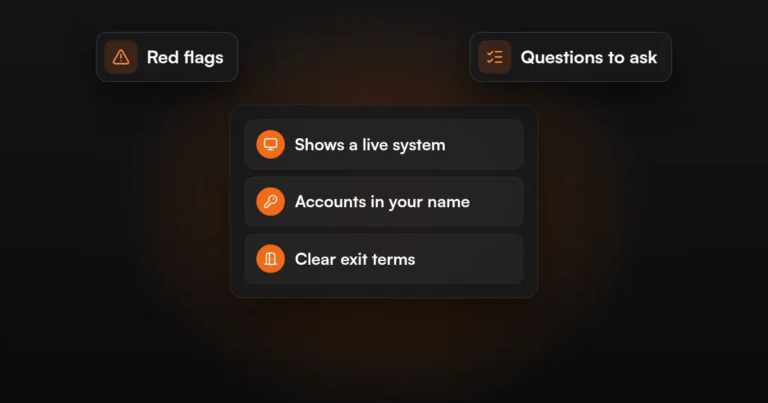
The main red flags are guaranteed results, ownership the agency will not give up, and reports that hide what you actually got. Most small business ad agencies are legitimate, but the bad ones tend to show the same warning signs.
Use this as a checklist while you compare proposals:
- Guaranteed leads, sales or return. No agency controls the ad auction, your market or your sales process. A forecast with stated assumptions is fine. A guarantee is a sales tactic.
- Your ads run in the agency’s ad account. If you leave, the history and the data stay with them.
- You cannot log in and see your own campaigns. You should have full access to Ads Manager at all times.
- Reports stop at reach, impressions and clicks. Those numbers are easy to grow. Leads, sales and cost per result are what you pay for.
- The fee and the ad spend are bundled into one payment. You cannot tell how much reached Meta and how much the agency kept.
- A long contract before any work has been proven. Good agencies do not need a lock-in to keep clients.
- No questions about your business. If nobody asks about margins, your best customers or how leads are handled, the plan is a template.
- Tracking is never mentioned. Campaigns built on broken tracking are optimized toward the wrong people.
- Pressure to sign today. A real offer will still be there next week.
- Proof without context. Screenshots of big numbers mean little without the spend, the time period and the type of business behind them.
One flag alone does not prove an agency is bad. The ownership and access flags are different: treat those as deal-breakers, because they decide what you keep if the relationship ends.
Who Should Own the Ad Account, Pixel and Creative?
You should. The business owns the ad account, the pixel, the Facebook Page and the Instagram account, and the agency is given access to work in them. That way your data and history stay with you whoever manages the ads.
Meta is built to work this way. Your business holds its assets in a business portfolio (formerly Business Manager) and can give an agency partner access to the ad account, pixel and Page. When the work ends, you remove that access and everything stays where it is.
| Asset | Who should own it | What the agency needs |
|---|---|---|
| Business portfolio | Your business, with at least two of your own people as admins | Nothing. It works from its own portfolio. |
| Ad account | Your business | Partner access to create and manage ads |
| Pixel (dataset) and Conversions API | Your business | Partner access to set up and test events |
| Facebook Page and Instagram account | Your business | Access to run ads from them |
| Payment method | Your business card on the ad account | None. It should not pay Meta for you. |
| Ad creative and source files | Your business, once paid for | The right to use them while it manages your ads |
| Customer lists and audiences | Your business | Access inside your ad account only |
| Landing pages and website | Your business | Editor access, if page changes are in scope |
Ownership matters for three reasons. The ad account holds your spend history and results. The pixel holds the conversion data that Meta uses to find more customers like yours. And your creative is an asset you paid for. If any of these sit with the agency, leaving means starting again.
Put it in writing. The agreement should say that the accounts are yours, that the agency works through access you grant, and that creative you pay for belongs to you, including the editable source files.
If your current agency already runs your ads in its own account, ask to move the work into an ad account you own. If it refuses, set up your own account and pixel now, so that your next campaigns build history that stays with you.
Should You Hire an Agency or Run the Ads Yourself?
Hire an agency when ads matter to your revenue and nobody inside the business has the time or skill to manage tracking, creative and testing every week. Run them yourself when the budget is small and someone can commit real hours to learning.
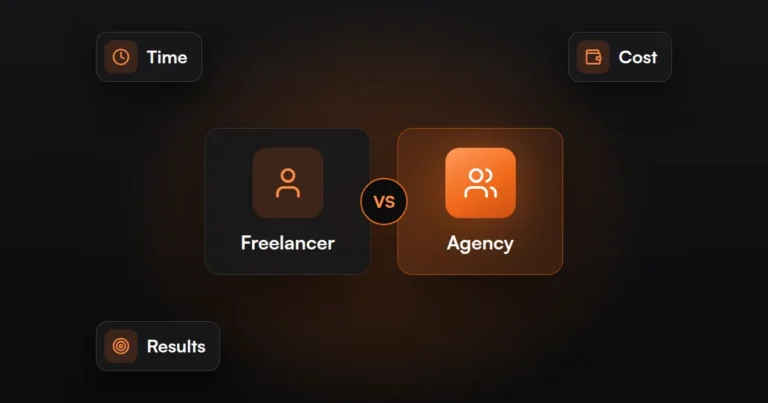
If you are asking “should I hire a Facebook ads agency?”, this comparison is a fair starting point.
| Option | Fits when | Watch out for |
|---|---|---|
| Run the ads yourself | The budget is small, the offer is simple, and one person can spend several hours a week learning and testing. | Slow progress, tracking mistakes, and time taken away from running the business. |
| Hire a freelancer | You already have creative and working tracking, and you want one direct contact. | No cover when that person is busy or away, and limited help outside media buying. |
| Hire an agency | You need strategy, creative, tracking and reporting handled together, or you plan to scale spend. | Higher cost, and the need to check ownership, scope and contract terms first. |
For a closer look at the middle two options, see Facebook Ads Freelancer vs Agency.
When to Hire a Facebook Ads Manager
Whether that manager is a freelancer, an agency or an employee, these are the usual signs that it is time:
- You spend steadily each month but cannot say which ads bring customers.
- Ads Manager and your own sales or lead records do not match.
- The same few ads have been running for months and results are slipping.
- You want to raise the budget and are worried about wasting it.
- The owner is managing ads late at night instead of running the business.
- You are about to launch a new product, location or offer and need it done properly.
Cost is part of this decision too. Agencies charge in different ways, and the fee is always separate from the ad spend you pay Meta. JuvioX charges a monthly fee or a percentage of ad spend for Facebook ads management, depending on the account, month-to-month with no lock-in.
How Do You Judge the First 90 Days?
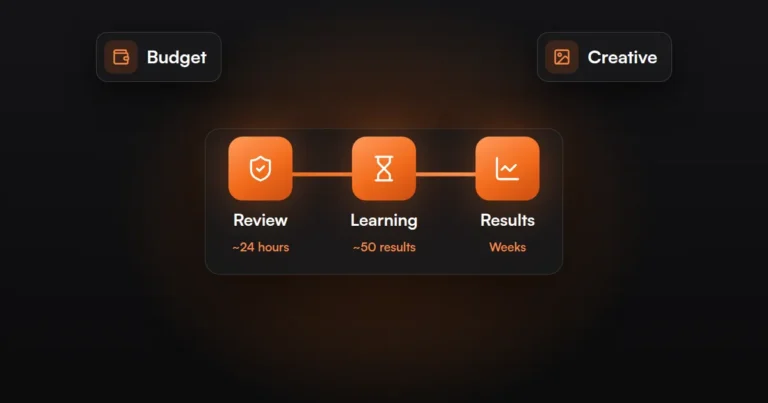
Judge the first 90 days on three things: whether the foundations were fixed, whether testing is structured, and whether cost per lead or sale is moving in the right direction. Do not judge on the first week, because new campaigns need time and data before results settle.
| Period | What should happen | What to check |
|---|---|---|
| Days 1–30 | Access set up in your accounts. Audit of past campaigns and tracking. Tracking fixed and tested. First campaigns and creative live. Reporting format agreed. | Can you see everything in your own Ads Manager? Do test leads or orders show up correctly? Did you get a written plan? |
| Days 31–60 | Structured tests of audiences, creative and offers. Regular reports. Feedback from you on lead or order quality. | Does each report say what was tested, what was learned and what changes next? Is your feedback being used? |
| Days 61–90 | Budget moving toward what works. Weak ads replaced. A plan for the next quarter. | Is cost per lead or sale trending the right way? Do the numbers match your own records? Is the next step clear? |
At day 90, ask yourself four questions:
- Do I own and have full access to the ad account, pixel and creative?
- Do I understand what the agency did each month and why?
- Do the reported leads or sales match what I see in my CRM, inbox or store?
- Is the trend good enough that I would choose to keep paying for it?
Results by day 90 will not always be where you want them, and an honest agency will tell you why and what it plans to change. Some problems should not wait that long, though. If you have no account access, no reports or no replies in the first month, raise it right away and be ready to leave.
What Should You Do Next?
Shortlist two or three agencies and ask each one the same questions from the table above. Compare the answers on ownership, fees, creative, reporting and contract terms before you compare prices.
If you want a second opinion on your current setup first, the JuvioX Meta Ads service page explains how we work, and the free audit shows where your account and tracking stand today.
FREE META ADS AUDIT
Find Out What Is Holding Your Facebook Ads Back
JuvioX reviews your ad account, tracking and creative, then sends a prioritized list of what to fix first. Free, with no obligation.
FAQ
Frequently asked questions
Which Facebook ad agencies are considered the best?
There is no single best Facebook ads agency. The best one for you has worked with your type of business and budget, lets you own your accounts, and reports on leads or sales. Treat "best agency" lists with care, because they are often written by agencies or paid for by the agencies on them.
How much does it cost to hire a Facebook ad agency?
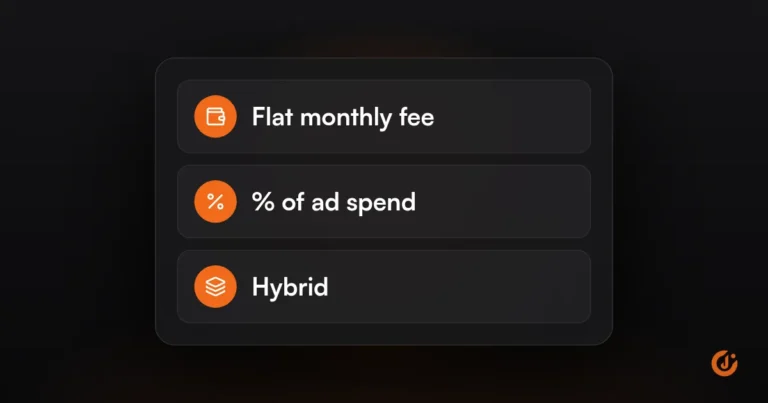
It depends on how the agency charges. Most use a flat monthly fee, a percentage of ad spend, or a mix of the two, and some add setup or creative fees. The fee is separate from the ad spend you pay Meta. JuvioX charges a monthly fee or a percentage of ad spend, depending on the account.
Are small business ad agencies legit?
Most are. Check a few things before you sign: you own the ad account and pixel, you can log in and see your campaigns, the fee and scope are in writing, and you can leave without a long contract. An agency that agrees to all four is very unlikely to be a scam.
Should you sign a long contract?
Usually not at the start. Month-to-month terms or a short notice period keep the agency accountable and let you leave if the work is poor. If a longer term comes with a lower fee, ask for a clause that lets you exit when agreed work is not delivered.
Can you keep your ad account if you leave?
Yes, if your business owns it. You remove the agency’s partner access and keep the account, its history and the pixel data. If the agency ran your ads in its own account, you will most likely lose that history, which is why ownership should be settled before any ads go live.