
On this page
Some AI automation agencies are legitimate and some are not. Real ones map your process, build and test the automation, connect it to tools you own, and support it afterwards. Warning signs are income claims, no examples of working systems, vague deliverables and tools locked inside the agency’s own accounts.
If you are asking “are AI automation agencies legit,” you have probably seen both sides: confident sales pitches on one screen and Reddit threads calling the whole industry a scam on the other. Both exist for a reason. This guide shows you how to tell the two kinds of agency apart before you pay anyone.
What Is an AI Automation Agency?
An AI automation agency is a service business that connects your software and adds AI steps so repeat work runs with less manual effort. It designs the workflow, builds it, tests it and keeps it running.
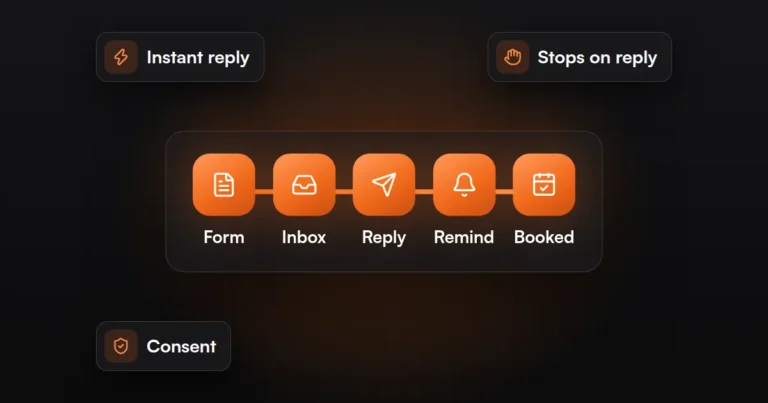
In practice, most of the work is plain workflow automation: when a lead fills in a form, create a contact, send a reply, alert the right person, set a reminder. The AI part is usually a small number of steps inside that flow, such as drafting a reply, sorting an inquiry by type, summarizing a call or answering common questions in a chat or phone assistant.
The tools are ordinary and widely available: a CRM, a workflow builder such as Zapier, Make or n8n, an email or texting tool, and an AI model. What you pay an agency for is the judgment about what to automate, the build, and the upkeep. Our AI & Marketing Automation service works this way, and so do many independent consultants and small studios.
What Does a Legitimate One Actually Deliver?
A legitimate agency delivers a documented, tested automation for one named process, running in accounts you own, with support after launch. You should be able to describe what you bought in one sentence.
The work normally follows the same order, whoever does it:
- Process mapping. They ask how the task is done today, step by step, and who does it. If the process is unclear, a good agency says so before building anything.
- A written scope. It names the trigger, each step, the tools involved, what happens when something fails, and what is not included.
- Build and testing. They build it, then run real test cases through it, including the awkward ones: a duplicate lead, a missing phone number, a message sent at 2 a.m.
- Handover. You get access to everything, a short written guide or recording, and a walk-through for the people who will use it.
- Support. Someone monitors errors, fixes breaks when a connected tool changes, and adjusts the workflow as your process changes.
What this looks like depends on the business:
| Business type | A typical legitimate deliverable |
|---|---|
| Home services (HVAC, plumbing, roofing) | Every web form and missed call creates a CRM record, sends an instant text reply, and assigns a call-back task to the dispatcher. |
| Law firm or clinic | An intake form routes inquiries by type, books the consultation, and sends reminders, with a person reviewing anything sensitive. |
| Online store | Welcome, abandoned cart and post-purchase flows run from store data, with AI used to draft and sort support replies for staff to approve. |
| B2B or SaaS | Leads are enriched, scored and routed to the right rep, with call notes summarized into the CRM after each meeting. |
One more thing a real agency raises without being asked: automated calls and texts, call recording and AI disclosure are regulated in the US, and the rules vary by state. An agency should tell you that consent and disclosure need attention and suggest you get legal review. This article is not legal advice, and an agency that waves the topic away is a concern.
Why Do So Many People Call Them a Scam?
Most scam complaints come from two sources: courses that sell the “start an AI automation agency” business model, and inexperienced sellers who learned from those courses. Neither tells you much about an experienced team.
The label became popular through online videos promising that anyone could start an agency with no experience and sign clients quickly. Many people bought the course, set up a website, and began pitching businesses within weeks. Read the Reddit threads on this topic and the same complaints repeat:
- The seller had never run an automation in a real business.
- The demo looked good, then failed on real data and real customers.
- Nobody answered when it broke.
- The business paid a monthly fee for something built in a few hours from a template.
- The agency owned the accounts, so leaving meant starting over.
Those complaints are fair. They describe bad vendors, and you can screen for every one of them. They do not show that automation fails.
What Are the Warning Signs?
The clearest warning signs are income or results guarantees, no working examples, vague deliverables and tools held in the agency’s accounts. One sign alone is worth a question; several together are a reason to walk away.
| Warning sign | What it usually means | What a legitimate agency does instead |
|---|---|---|
| Guaranteed revenue, leads or hours saved | They are selling an outcome they do not control | Describes what the system will do and how you will measure it |
| No system you can see running | They have not built one for a real business | Shows a live workflow and explains each step |
| “We will implement AI across your business” | No defined scope, so no way to say it was delivered | Scopes one process with a written list of steps |
| Everything sits in their accounts | You are renting, and leaving costs you the build | Builds in your accounts, or transfers them to you |
| Long contract before anything is built | Their income depends on the lock-in, not the result | Short commitment, clear exit terms |
| No questions about your current process | A template is coming, whether it fits or not | Maps the process first and tells you what not to automate |
| No mention of testing, errors or monitoring | It will break quietly and nobody will notice | Explains what happens when a step fails and who is alerted |
| No mention of consent for texts and calls | They have not worked with regulated outreach | Flags the rules and recommends legal review |
| Their main product is a course or community | You are not the real customer | Earns its income from client work |
A related sign is AI used where a simple rule would do. If the task is “when a form arrives, send this email,” no AI is needed, and adding it only adds cost and things that can go wrong.
FREE AUTOMATION AUDIT
Find Out Where Your Leads Are Slipping Through
JuvioX reviews how leads reach you, where they wait and what happens next, then sends a prioritized list of what to automate first. Free, with no obligation.
What Questions Should You Ask?
Ask questions that can only be answered by someone who has built and maintained real systems. Vague or defensive answers tell you as much as good ones.
- Can you show me an automation that is running for a business today and explain each step?
- Which exact process will you automate first, and what will it do at each step?
- Whose accounts will it be built in, and who pays the software bills?
- What happens when a step fails? Who finds out, and how fast is it fixed?
- Where does a person stay involved, and what will AI never do without review?
- What happens to my customer data, and which AI tools will it pass through?
- How will we know it is working? What will we measure before and after?
- What does setup cost, what does upkeep cost, and what is not included?
- If I cancel, what do I keep?
Question 8 matters more than it looks. An agency that cannot say how results will be measured cannot show you later that the work paid off. If your lead sources, calls and form submissions are not tracked properly today, fix that first or alongside the build; that is what our Tracking & Analytics service covers. For question 9, How Much Does Marketing Automation Cost? explains the three parts of any quote.
Who Should Own the Accounts and Automations?
You should. The CRM, the workflow tool, the phone number, the AI account and the data in them should be in your business’s name, with the agency added as a user.
Ownership is what makes the relationship safe to enter and safe to leave. Check each item before work begins:
| Asset | Who should own it | What to confirm |
|---|---|---|
| CRM and contact data | You | You are the account owner and can export contacts at any time |
| Workflow tool (Zapier, Make, n8n) | You | The workflows live in your workspace, not a shared agency one |
| Phone numbers and texting registration | You | Numbers are registered to your business and can be moved |
| AI accounts and API keys | You | Billing is on your card and you can revoke the agency’s access |
| Prompts, templates and documentation | You | You receive a copy at handover |
| Logins | You | The agency has its own user seats, not your password |
Some platforms let an agency run client accounts under its own master account, and that setup can be fine. What matters is the answer to one question: if you leave, can the account, its workflows and its data be transferred to you? Get that answer in writing.
At JuvioX, the fee is agreed with you in writing before any work starts, and the agreement is month-to-month, not a 3- or 6-month contract. That arrangement only makes sense if the client can walk away with everything, which is why ownership comes up before the build does.
How Do You Decide?
Start with the process, not the agency. Pick one repeat task that costs you time or loses you leads, such as lead follow-up, and ask two or three agencies how they would handle it. Compare the answers against the warning signs and the ownership table above. The legitimate ones will sound less exciting and far more specific.
FREE AUTOMATION AUDIT
Find Out Where Your Leads Are Slipping Through
JuvioX reviews how leads reach you, where they wait and what happens next, then sends a prioritized list of what to automate first. Free, with no obligation.
FAQ
Frequently asked questions
Do AI agencies actually work?
They work when the agency has built real systems and the task suits automation: a repeat process with clear steps and enough volume to matter. They fail when the scope is vague, the process is unclear, or nobody maintains the system after launch. The agency's skill matters, and so does your choice of task.
How much do AI automation agencies charge?
Pricing usually has three parts: the software subscriptions, a one-time setup fee, and ongoing upkeep. The total depends on how many workflows and tools are connected, so quotes vary widely. Ask for each part to be listed separately. JuvioX agrees its fee with you in writing before any work starts, and the agreement is month-to-month, not a 3- or 6-month contract.
Can you do it yourself?
Yes, for simple workflows. Tools such as Zapier and Make are built for non-developers, and a form-to-CRM-to-email flow is within reach of most owners. An agency earns its fee on workflows with several tools, error handling, AI steps that need testing, and the upkeep that follows.
What results are realistic?
Realistic results are operational: every lead gets a reply, reminders go out on time, records are filled in without retyping, and fewer tasks are forgotten. Whether that becomes more revenue depends on your offer and your team. Be careful with anyone who promises a specific number before seeing your process.
What if the automation breaks?
It will at some point, because the tools it connects keep changing. What matters is that failures trigger an alert, someone is responsible for fixing them, and there is a manual fallback in the meantime. Ask who gets the alert and how quickly they respond before you sign.