On this page
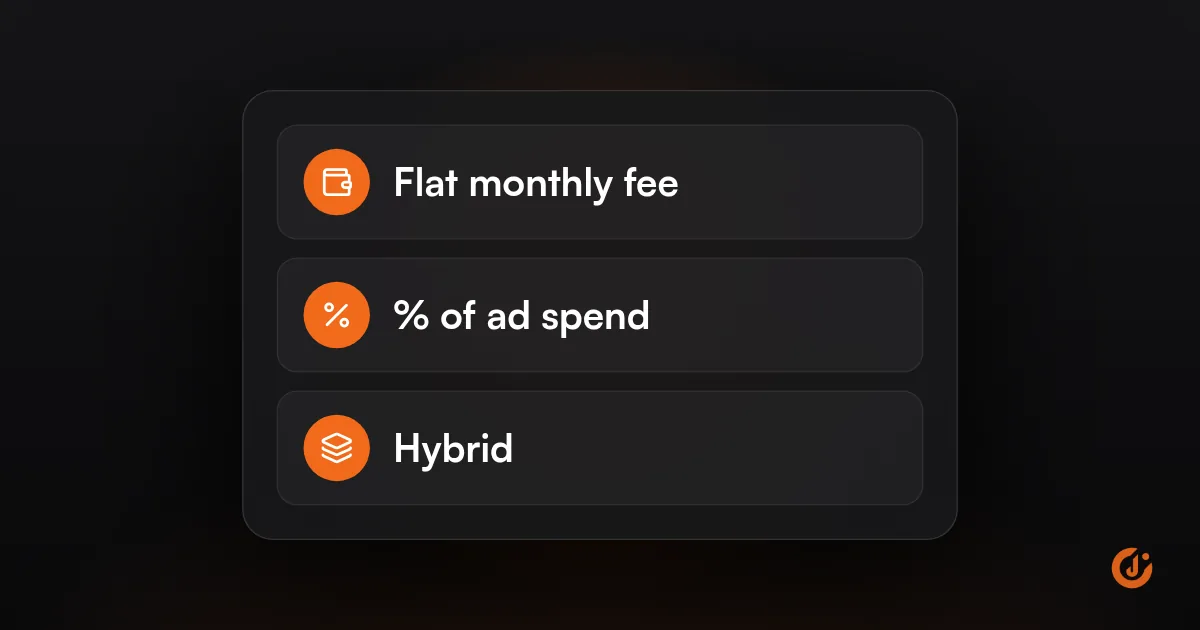
Facebook ads agencies usually charge a flat monthly fee, a percentage of ad spend, or a mix of both, and some add setup or creative fees. The fee is separate from the ad spend you pay Meta. A flat fee is the easiest to budget for because it does not rise when your ad spend grows.
So how much does a Facebook ads agency charge? It depends less on a going rate and more on which pricing model the agency uses and what it puts inside the fee. This guide explains each model for Meta Ads on Facebook and Instagram, so you can read a quote and know what you are paying for.
How Do Facebook Ads Agencies Charge?
Most agencies use one of three models: a flat monthly fee, a percentage of your ad spend, or a hybrid of the two. A smaller number charge by results, by the hour or by the project.
| Pricing model | How the fee is set | If you raise ad spend | Main thing to check |
|---|---|---|---|
| Flat monthly fee | One fixed amount each month for an agreed scope. | The fee stays the same. | That the scope is written down. |
| Percentage of ad spend | A share of whatever you spend with Meta that month. | The fee rises with it. | Whether there is a minimum fee. |
| Hybrid | A base fee plus a smaller percentage of spend. | The fee rises, but more slowly. | How the two parts are calculated. |
| Tiered flat fee | A fixed fee that steps up when spend passes set levels. | The fee jumps at each level. | Where the levels are. |
| Performance-based | A fee per lead or sale, or a share of revenue. | The fee follows results. | How results are counted, and by whom. |
| Hourly or project | A price for a set task, such as an audit or a setup. | No link to spend. | What happens when the project ends. |
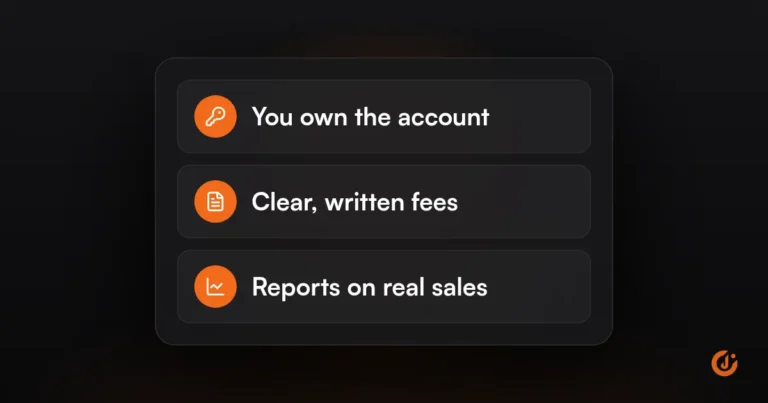
Whichever model applies, your ad spend should be charged to your own card by Meta, and the agency should invoice its fee separately. That way you can always see how much went to ads and how much went to management.
This post is about the management fee.
Flat Fee vs Percentage of Spend: Which Suits You?
A flat fee suits you if you want a predictable cost and plan to grow your ad spend. A percentage suits you if your spend moves up and down a lot and you want the fee to follow it.
The two models push an agency in different directions. With a percentage, the agency earns more when you spend more, whether or not the extra spend is profitable. With a flat fee, the agency earns the same either way, so the risk is that the work thins out over time unless the scope is clear.
| Your situation | Better fit | Why |
|---|---|---|
| You plan to scale ad spend over the next year | Flat fee | Your management cost does not climb with every increase. |
| You need a fixed monthly marketing cost | Flat fee | The invoice is the same each month. |
| Your spend swings sharply by season | Percentage or hybrid | The fee drops in quiet months. |
| You are starting very small and unsure about committing | Project or percentage | You avoid a fixed fee that outweighs your ad spend. |
| You want the agency to have no reason to push spend up | Flat fee | Its income does not depend on your budget. |
A quick test for any percentage quote: ask what the fee would be at your current spend, at double that, and at half. If the answers surprise you, the model is not a good fit.
What Should the Fee Include?
At a minimum, the fee should cover campaign strategy, setup, ongoing management and reporting. Beyond that, agencies differ a lot, so ask for the scope in writing and compare it line by line.
Use this list when you read a proposal. Mark each line as included, extra or not offered.
☐ Account and campaign setup, or a rebuild of what you have.
☐ Audience planning and testing.
☐ Ad copy.
☐ Images and video, with a stated number of new ads per month.
☐ Pixel and Conversions API setup, and regular checks that they still work.
☐ Ongoing optimization, with a stated number of reviews per week or month.
☐ Landing page or lead form recommendations.
☐ A regular report that shows leads or sales and cost per result.
☐ Calls or meetings, and a named person to contact.
☐ Management of comments and messages on the ads, if you need it.
Tracking deserves a specific question. If conversions are not measured properly, nobody can tell whether the fee is paying off. Some agencies treat it as part of setup, and others quote it as separate tracking and analytics work.
If you already have quotes and cannot tell which one is better value, a free audit of your account will show what work it actually needs.
FREE META ADS AUDIT
Find Out What Is Holding Your Facebook Ads Back
JuvioX reviews your ad account, tracking and creative, then sends a prioritized list of what to fix first. Free, with no obligation.
What Extra Costs Should You Ask About?
Ask about setup fees, creative production, tracking work, landing pages and software. Your real Facebook ads management cost is the fee plus these extras, and they can change which quote is cheaper.
| Possible extra | What it covers | Question to ask |
|---|---|---|
| Setup or onboarding fee | The first build of the account, audiences and campaigns. | Is it one-time, and do I keep everything if I leave? |
| Creative production | Design, video editing, photo shoots or creator content. | How many new ads per month are in the fee? |
| Tracking setup | Pixel, Conversions API, and links to a store or CRM. | Is it in the fee, and who fixes it when it breaks? |
| Landing pages | Building or rewriting the page the ads send people to. | Is page work included or quoted separately? |
| Software and tools | Reporting dashboards, call tracking or lead tools. | Who pays for the licenses, and whose account are they in? |
| Minimum term | A set number of months before you can cancel. | What is the notice period, and is there an exit fee? |
| Extra platforms | Running ads on other channels as well. | Is each channel priced on its own? |
None of these extras is unfair on its own. Good creative and reliable tracking take real work. What matters is that you hear about them before you sign and not on the second invoice.
What Is a Fair Fee for a Small Budget?
A fair fee is one that leaves most of your total budget going to ads and still pays for the work the account needs. With a small budget, the fee can easily outweigh the ad spend, and then management is not good value yet.
Owners often ask what a reasonable price is to pay an ad agency. There is no single figure, but you can work out whether a quote makes sense for you:
- Add the monthly fee and your monthly ad spend to get your total budget.
- Divide the fee by that total. This is the share going to management.
- Estimate how many leads or sales the ad spend can realistically bring.
- Add the fee to the ad spend, then divide by those leads or sales. This is your true cost per result.
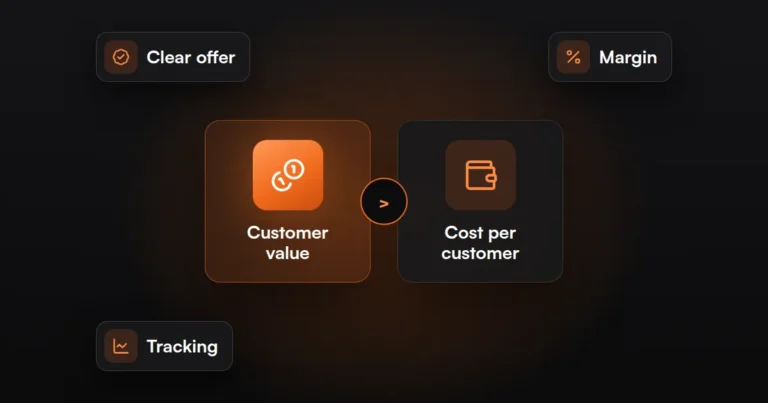
- Compare that with what a customer is worth to you.
As a guide to the math: if the fee equals your ad spend, half of your budget is going to management. If the fee is half your ad spend, a third is. The smaller your ad budget, the harder it is for any agency fee to pay for itself.
If the numbers do not work yet, you have other options:
- Pay for a one-time setup. Have a specialist build the account and tracking, then run it yourself.
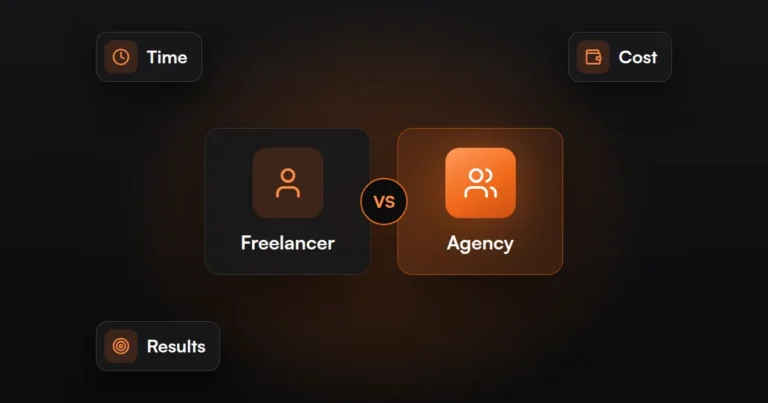
- Hire a freelancer. One person with lower overhead can make sense at a smaller scale. See Facebook Ads Freelancer vs Agency: Which Should You Hire?.
- Run the ads yourself for now. Prove the offer on a small budget, and bring in help when you are ready to spend more.
- Rework the budget.
How Does Pricing Differ for Ecommerce Stores?
Ecommerce accounts usually need more creative and more tracking work than lead generation accounts, and pricing reflects that. Stores are also more likely to be offered percentage or revenue-share pricing.
If you run an online store, look closely at four things:
- Creative volume. Stores with many products go through ads quickly. Ask how many new images or videos per month are included.
- Catalog and tracking setup. Connecting your product catalog and getting purchase tracking right on your store platform takes time. Check whether it is in the setup fee.
- Seasonal spikes. If you raise spend sharply for the holidays, a percentage fee rises with it. Ask whether there is a cap.
- Revenue-share deals. If the fee is a share of revenue, agree on whose numbers count. Revenue reported in Ads Manager and revenue in your store are rarely the same, and the difference affects the invoice.
Local service and B2B businesses face a different question. Their accounts are often simpler to run, but lead quality matters more. Ask whether the fee includes checking which leads became customers, or only counting form fills.
How Does JuvioX Charge?
JuvioX charges either a monthly management fee or a percentage of ad spend, depending on the account. We agree the fee with you in writing before any work starts.
The agreement is month-to-month, not a 3- or 6-month contract, so you can stop when you choose. Your ad spend is paid directly to Meta from your own account.
You can read more about how we work on the Meta Ads service page. If you are comparing agencies, our guide on how to choose a Facebook ads agency covers the questions to ask beyond price. A free audit is the easiest way to see what your account needs before anyone quotes for it.
FREE META ADS AUDIT
Find Out What Is Holding Your Facebook Ads Back
JuvioX reviews your ad account, tracking and creative, then sends a prioritized list of what to fix first. Free, with no obligation.
FAQ
Frequently asked questions
How much does it cost to hire a Facebook ad agency?
It depends on the pricing model and the scope of work. Agencies charge a flat monthly fee, a percentage of ad spend, or a mix, and some add setup or creative fees. Ask each agency for the fee at your current ad spend and a written list of what it covers, then compare like with like.
Is the agency fee separate from ad spend?
Yes. Ad spend is what you pay Meta to show your ads, and it should be charged to your own card. The agency fee pays for the people managing the campaigns. If an agency bundles both into one invoice, ask for a breakdown so you can see how much reached Meta.
Is $500 enough for Facebook ads?
It can be enough ad spend to test one offer in a local area. It will not stretch to cover an agency fee as well. At that level, most businesses do better running the ads themselves or paying for a one-time setup.
Is creative included in the fee?
Sometimes. Many agencies include ad copy and basic design, and charge extra for video, photo shoots or creator content. Ask how many new ads you will get each month, who makes them, and whether the finished files belong to you.
Can you cancel month to month?
It depends on the agency. Some ask for a minimum term of several months, and others work month to month. Check the notice period and any exit fee before you sign. JuvioX works month-to-month with no lock-in.