On this page
Hire a Facebook ads freelancer when your budget is small, you already have ad creative, and you want one direct contact. Hire an agency when you need creative, tracking and landing pages handled together, or cover when one person is away. Run ads yourself only if someone has real time to learn and test.
The Facebook ads freelancer vs agency question comes down to how much of the work you need done for you. This post covers Meta Ads on Facebook and Instagram, and it compares the two options on cost, creative, tracking and risk so you can match one to your budget and stage.
What Is the Difference Between a Freelancer and an Agency?
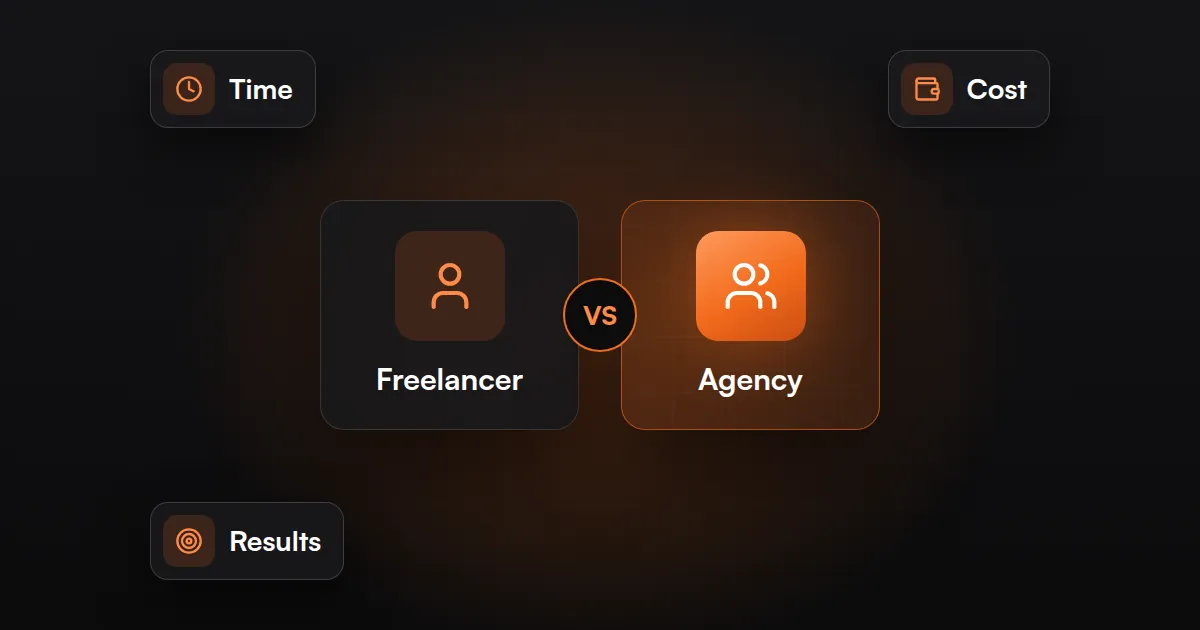
A freelancer is one person who plans and manages your ads and talks to you directly. An agency is a team, with different people for strategy, media buying, creative and tracking. The work is the same. What changes is how many skills you get and what happens when someone is unavailable.
| Freelancer | Agency | |
|---|---|---|
| Who does the work | The person you hired. | An account manager plus specialists behind them. |
| Skills covered | Usually media buying, sometimes copy or basic design. | Media buying, creative, tracking and often landing pages. |
| Ad creative | Often supplied by you, or made with simple tools. | Usually produced in-house, sometimes at extra cost. |
| Tracking setup | Depends on the person. Some are strong, some avoid it. | Normally a dedicated person or team. |
| Communication | Direct and quick, with the person doing the work. | Through an account manager, on a set schedule. |
| When someone is away | Work pauses unless they arrange cover. | Another team member steps in. |
| Monthly cost | Usually lower. | Usually higher. |
| Typical agreement | Informal or a short contract. | A written contract with a set scope. |
The line between the two is not always sharp. Some freelancers work with a designer and a tracking specialist they trust. Some small agencies are two people. So ask one question of both: who exactly will do each part of the work on my account?
How Do the Costs Compare?
A freelancer usually costs less per month, because you are paying one person with low overhead. An agency usually costs more, because the fee covers several roles. The cheaper quote is not always the cheaper option once you add what is missing from it.
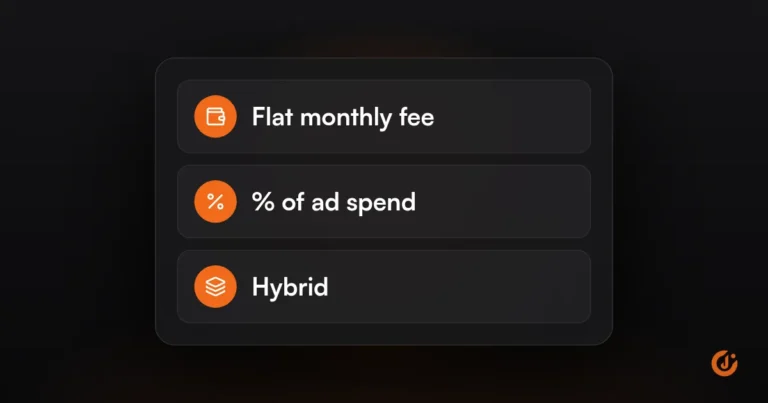
Freelancers tend to charge by the hour, by the project or with a monthly retainer. Agencies tend to charge a flat monthly fee, a percentage of your ad spend, or a mix of both. In every case, the fee is separate from the ad spend you pay to Meta.
To compare two quotes fairly, list everything your ads need and see who covers each line.
| What your ads need | With a freelancer | With an agency |
|---|---|---|
| Campaign setup and management | Included. | Included. |
| Ad copy | Usually included. | Included. |
| Images and video | Often you supply them or pay a designer. | Often included, or priced as an add-on. |
| Pixel and Conversions API setup | Sometimes included. Ask before you assume. | Usually included or quoted up front. |
| Landing page changes | Rarely included. | Sometimes included, often a separate service. |
| Reporting | A simple report or a call. | A scheduled report, often with a dashboard. |
| Your own time | More. You fill the gaps and coordinate other people. | Less. One team handles the pieces. |
Then work through these steps:
- Write down what you need in the next three months: management, creative, tracking, landing pages.
- Ask each freelancer or agency which of those are inside the quote.
- Price the gaps. If the freelancer does not make video, find out what a video editor will cost you.
- Add your own hours for briefing, chasing and approving.
- Compare the totals, then compare who you trust more to do the work.
For more on how agency pricing works, see Facebook Ads Agency Pricing: What Agencies Charge. JuvioX charges a monthly fee or a percentage of ad spend, depending on the account, month-to-month with no lock-in.
Not sure what your account needs before you ask for quotes? A free audit will tell you whether the gaps are in creative, tracking or campaign setup.
FREE META ADS AUDIT
Find Out What Is Holding Your Facebook Ads Back
JuvioX reviews your ad account, tracking and creative, then sends a prioritized list of what to fix first. Free, with no obligation.
When Is a Freelancer the Right Choice?
A freelancer is the right choice when your needs are narrow, your budget is modest, and the pieces around the ads are already in place. You get direct contact with the person doing the work, at a lower monthly cost.
It tends to fit when:
- You have one main offer and one or two audiences to reach.
- You already have photos or video, or someone on your team can make them.
- Your pixel and conversion tracking already work and have been tested.
- Your landing page or lead form converts and does not need rebuilding.
- You are happy to be the project manager who connects the pieces.
A few examples by business type:
- A single-location gym or studio with a trial offer and plenty of phone video from classes.
- A small online store with good product photos, working purchase tracking and a short product range.
- A coach or consultant who sells one program through a booking page that already works.
The main risk is that everything depends on one person. If they get sick, take a holiday or take on too many clients, your ads wait. You can lower that risk in three ways: keep the ad account in your own name, ask for the setup to be written down, and agree on a notice period in advance.
When Is an Agency the Right Choice?
An agency is the right choice when the ads depend on several skills at once, or when a gap in service would cost you real money. You pay more, and in return one team is responsible for creative, tracking and results together.
It tends to fit when:
- You need new ad creative every month and nobody in-house can make it.
- Your tracking is broken or complicated, for example a store that needs the Conversions API, or leads that must be matched to a CRM. This is tracking and analytics work, and it is where many one-person setups fall short.
- You have several locations, product lines or offers to run at the same time.
- Your landing pages need work before more traffic is sent to them.
- You plan to raise ad spend and want someone checking the account every week.
- You advertise on more than one platform and want them planned together.
Examples by business type:
- A home services company with several service areas, where each area needs its own campaigns, lead routing and reporting.
- An ecommerce store with a large catalog, where catalog ads, purchase tracking and a steady supply of product video all have to work together.
- A B2B company with a long sales cycle, where lead quality matters more than lead count and CRM data needs to flow back to Meta.
[YOUR EXAMPLE: a business that moved from a freelancer to an agency, or the other way. Say what type of business it was, what was missing before, and what changed after the switch.]
Agencies carry their own risks: an account handed to a junior, a long contract, or a bundle of services you do not use. Our guide on how to choose a Facebook ads agency lists the questions that expose these before you sign. You can also see how we handle Facebook and Instagram campaigns on the JuvioX Meta Ads service page.
Should You Run Facebook Ads Yourself Instead?
Run the ads yourself only if someone in the business can give them steady time every week and the budget is small enough that mistakes are affordable. Owners often ask each other whether they do their own Facebook ads or use an agency, and the honest answer depends on hours more than talent.
Doing it yourself means taking on all of this:
- Setting up the pixel and checking that leads or purchases are counted.
- Building campaigns and choosing the objective and audience.
- Writing ads and producing new images or video regularly.
- Checking results a few times a week and deciding what to pause, change or test.
- Keeping up with changes to the platform.
There is also a middle path, and it suits many small businesses:
- Keep creative in-house and outsource the rest. You know your product and can film it on a phone. A freelancer or agency handles setup, tracking and optimization.
- Pay for a one-time setup. Have a specialist build the account, tracking and first campaigns, then run them yourself with a monthly check-in.
- Start yourself, then hand off. Run a small test to prove the offer, and bring in help once you are ready to spend more.
It is time to hand the ads to someone else when you cannot say which ads bring customers, when you keep skipping the weekly check, or when you want to raise the budget and do not trust your own setup.
What Should You Check Before Hiring Either?
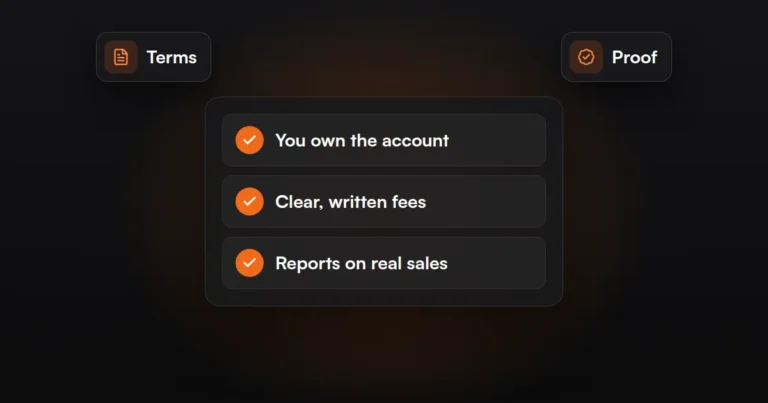
Check the same five things with a freelancer or an agency: who owns the accounts, what is in scope, who does the work, how results are reported, and how you can leave. The answers matter more than the label.
☐ Ownership: the ad account, pixel and Page are in your business’s name, and they work through access you can remove.
☐ Scope: management, creative, tracking and landing pages are each marked as included or extra, in writing.
☐ Who does the work: you have spoken to the person who will be in your account.
☐ Workload: for a freelancer, how many clients they manage and who covers when they are away. For an agency, how many accounts your manager handles.
☐ Reporting: you will see leads or sales and cost per result, on a schedule you agreed.
☐ Exit: the notice period is short, and you keep your creative and data when you go.
If you are still undecided, this table gives a quick read.
| If this sounds like you | Lean toward |
|---|---|
| Small budget, one offer, and time to learn | Doing it yourself |
| Small budget, creative and tracking already in place, no time | A freelancer |
| You can make your own video but tracking is a mess | A freelancer with tracking skills, or an agency |
| You need creative, tracking and landing pages together | An agency |
| Several locations, product lines or platforms | An agency |
| You cannot afford a two-week gap if one person is away | An agency |
If you want a clear view of what your account needs before you decide, start with a free audit. It shows what is working, what is missing and which kind of help fits.
FREE META ADS AUDIT
Find Out What Is Holding Your Facebook Ads Back
JuvioX reviews your ad account, tracking and creative, then sends a prioritized list of what to fix first. Free, with no obligation.
FAQ
Frequently asked questions
What is the difference between a freelancer and an agency?
A freelancer is one person who manages your ads and deals with you directly. An agency is a team that covers media buying, creative and tracking, with backup when someone is away. Freelancers usually cost less and suit simple accounts. Agencies cost more and suit accounts that need several skills at once.
How much do agencies charge for Facebook ads?
It depends on the pricing model. Agencies usually charge a flat monthly fee, a percentage of ad spend, or a mix, and some add setup or creative fees. The fee is separate from what you pay Meta for the ads. JuvioX charges a monthly fee or a percentage of ad spend, depending on the account. See Facebook Ads Agency Pricing: What Agencies Charge for a full explanation.
How much do freelancers charge for Meta ads?
Freelancers usually charge by the hour, per project or with a monthly retainer, and the price depends on their experience and how much of the work they take on. Ask what the price includes, especially creative and tracking, because those are the items most often left out.
Is $500 enough for Facebook ads?
It can be enough to test one offer with one audience, especially for a local business. It is usually too small to also cover a management fee, so at that level most owners run the ads themselves or pay for a one-time setup. To plan a budget from the results you need, see How Much Should You Spend on Facebook Ads?.
Who makes the ad creative?
It depends on what you agree. Many freelancers expect you to supply photos and video and will write the copy. Most agencies can produce creative, either inside the fee or as an add-on. Settle this before you start, and confirm that finished ads belong to your business.