On this page
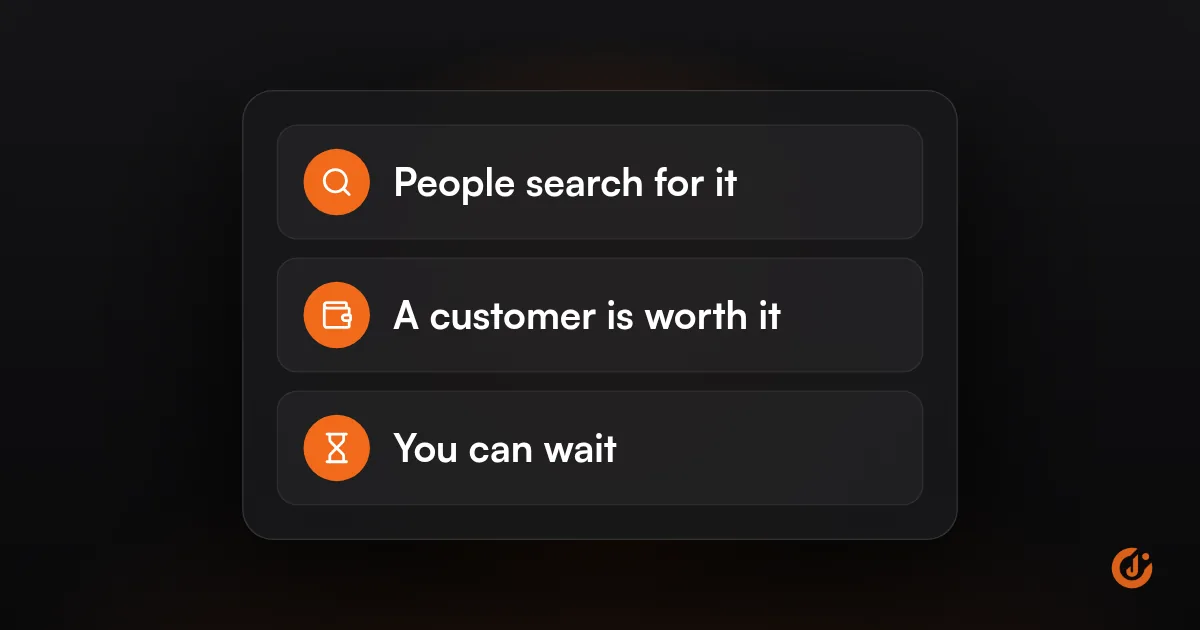
SEO is worth it for a small business when customers search for what you sell, each customer is worth enough to cover months of work, and you can wait for results. It is a poor fit if you need leads this month or nobody searches for your service. In that case, start with ads and add SEO later.
When is SEO worth it?
SEO is worth it when there is steady search demand for what you sell and one new customer brings in enough profit to pay for the work several times over. If you have ever asked “do I need SEO?”, these are the conditions to check.
- People already search for it. Type your service plus your city, or your product type, into Google. If Google suggests related searches and competitors show up, demand exists.
- A customer is worth enough. A roofer, a dentist, a law firm or a B2B software company can cover months of SEO with a handful of new customers. A business selling a low-priced item once needs far more volume to get there.
- You can wait. SEO builds slowly. You need other sources of leads while it does.
- Your site can turn a visitor into a lead. A clear offer, a phone number, a form or a checkout that works.
- You will be in business for years. The pages you build keep working after the invoice is paid, which is the main difference from ads.
How this looks by business type:
| Business type | Usually worth it when | Usually not the first move when |
|---|---|---|
| Local services (plumber, HVAC, dentist) | People search “service + city” and you serve that area | You just opened and need calls this week |
| Ecommerce | You sell products people search by type or problem, with healthy margins | You resell the same items as large marketplaces at thin margins |
| B2B and SaaS | Buyers research the problem before talking to sales | The category is new and nobody searches for it yet |
| Bookings (salon, med spa, clinic) | Repeat visits make each new client valuable | You have one location with a full calendar already |
When is SEO not worth it?
SEO is not worth it, at least not yet, when you need results fast, when no one searches for what you offer, or when the numbers cannot work. Being honest about this saves money.
- You need leads this month. Ads can bring visitors the day they go live. SEO cannot.
- Nobody searches for it. A brand-new kind of product needs awareness first: ads, social, partnerships, outreach.
- The business may change soon. If you plan to pivot, rename or sell within the year, long-term work has little time to pay back.
- The margin is too thin. If one customer brings a few dollars of profit and never returns, the break-even point is far away.
- The site cannot convert. Sending more visitors to a page with no clear offer wastes them. Fix the page first.
In these cases, start with Google Ads to get leads and learn which searches turn into customers, then put that knowledge into SEO. We compare the two in SEO vs Google Ads.
FREE SEO AUDIT
Find Out What Is Holding Your Rankings Back
JuvioX reviews your site, content and Search Console data, then sends a prioritized list of what to fix first. Free, with no obligation.
How much does it take to see a return?
It takes enough months of consistent work for your pages to rank and enough profit per customer to cover those months. The time is the part most owners underestimate.
A simple way to test it before you spend:
- Work out your profit from one new customer, including repeat business.
- Take the monthly SEO cost you are quoted and multiply it by the number of months you can commit.
- Divide the total cost by the profit per customer. That is how many customers SEO must bring to break even.
- Ask whether that number is realistic for the searches in your market. If it takes three customers, the odds are good. If it takes three hundred, look harder.
Costs vary with the size of your site and how competitive your market is; see How Much Does SEO Cost? for what drives the price. On timing, there is no fixed number of months, and nobody can honestly give you one. Early signs such as more pages indexed and more impressions come first, and leads follow. How Long Does SEO Take to Work? walks through the stages.
What should a small business do first?
Start with the free and low-cost basics before paying for a monthly service. Google’s own guidance says a small local business can probably do much of the work itself (Google Search Central, as of October 2026).
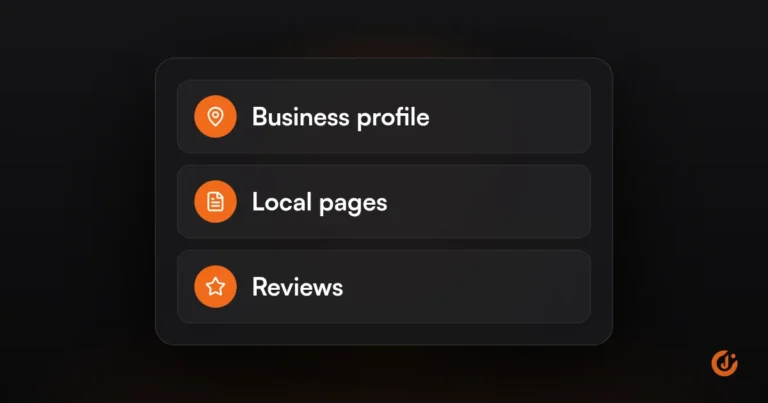
- Set up Google Search Console and confirm Google can find and index your pages.
- If you serve a local area, claim and complete your Google Business Profile.
- Make one page for each main service or product category, written for the words customers use.
- Put a clear next step on every page: call, book, request a quote or buy.
- Set up tracking for calls, forms and sales, so you can see what search brings in.
- Ask real customers for reviews.
Once those are done, paid help makes more sense, because the money goes into growth instead of basics. If you want to see where your site stands first, our SEO team offers a free audit.
How do you know if it is working?
SEO is working when tracked leads or sales from organic search go up, not just when rankings or traffic do. Rankings are an early sign; revenue is the result.
| Stage | What you should see | Where to look |
|---|---|---|
| Early | More pages indexed, more impressions, first rankings for specific searches | Google Search Console |
| Middle | More clicks to service or product pages, not only blog posts | Search Console and Google Analytics |
| Later | Calls, forms, bookings or orders from organic search | Analytics with conversion tracking, your CRM or order system |
None of this is visible without measurement. If calls and forms are not tracked, you cannot tell good SEO from bad, which is why we set up tracking and analytics before judging any channel. If traffic is rising but leads are flat, read SEO Traffic but No Leads or Sales?.
What if you already paid for SEO and saw nothing?
Then the question is not whether SEO works, but what was done with your money. In most cases one of a few causes explains it, and you can check each one yourself.
| What to check | What it tells you |
|---|---|
| Ask for a list of the work done each month | If nobody can produce one, little was done |
| Look at which searches the site ranks for | Rankings for your own name or for searches no buyer uses are not results |
| Check whether leads were tracked | Without tracking, results may exist but were never counted, or never existed |
| Check who owns the website, content and Google accounts | If the agency owns them, you lose the work when you leave |
| Look at what changed on the site | No new or improved pages means there was nothing for Google to rank |
A bad experience with one provider does not mean the channel cannot work for your business. It does mean the next agreement should be different: a written plan, monthly reporting in leads, accounts in your name and no long lock-in. Google itself states that “No one can guarantee a #1 ranking on Google” (Google Search Central, as of October 2026), so treat any guarantee as a warning sign. Our guide on how to choose an SEO agency lists the questions to ask.
JuvioX works on a flat monthly management fee, month-to-month, with no lock-in. If you want a second opinion on past work, the free audit will show what was and was not done.
FREE SEO AUDIT
Find Out What Is Holding Your Rankings Back
JuvioX reviews your site, content and Search Console data, then sends a prioritized list of what to fix first. Free, with no obligation.
FAQ
Frequently asked questions
Is SEO still worth it in 2026?
Yes, for businesses whose customers still search before they buy, which is most of them. What has changed is that AI answers now handle some simple questions without a click, so the value sits in pages that match buying searches and show real expertise. The three tests in this post still decide it: demand, customer value and time.
How much should SEO cost for a small business?
There is no single right price. Cost depends on the size of your site, how competitive your market is and how much work is needed each month. Compare what each quote includes, in tasks and reporting, rather than the price alone. JuvioX charges a flat monthly management fee, month-to-month, with no lock-in.
Do I need SEO if I run ads?
You do not need it, but the two work well together. Ads bring leads while you pay for them and show you which searches convert. SEO builds pages that keep bringing visitors without a cost per click. Many businesses start with ads, then add SEO using what the ads taught them.
Can I do SEO myself?
Yes, especially the basics. Google says a small local business can probably do much of the work itself. Setting up Search Console, completing your Google Business Profile, writing clear service pages and asking for reviews need time more than expertise. Paid help is most useful for technical problems, competitive markets and when you have no time.
Is SEO dead now with AI?
No. Google states that there are no additional requirements to appear in its AI features and that normal SEO best practices remain relevant (as of October 2026). AI answers do take some clicks for simple questions, so traffic alone is a weaker measure than it used to be. Leads and sales are the measure that counts.
2 sources & references
- Google Search Central SEO Starter Guide developers.google.com
- Google Search Central Do You Need an SEO? developers.google.com
Official pages we checked when writing this article.