On this page
A digital marketing agency is worth it when you need several skills at once, such as ads, tracking and landing pages, but cannot yet fill a full-time team. In-house makes more sense once marketing is a steady, large part of the business. Either way, judge it by leads or sales, not activity.
If you are asking “is a digital marketing agency worth it,” you have probably read a few angry threads from owners who paid for months and got a slide deck. Those stories are real. So are the businesses that grew because someone finally ran their ads, tracking and pages as one system. The difference is usually fit and measurement, not luck. This guide covers agency, in-house and freelancer, and when each one is the wrong choice.
When Is an Agency Worth It?
An agency is worth it when your growth depends on several specialist skills working together and you cannot justify hiring each one. It is not worth it when the basics of the business are not ready for more traffic.
Running paid marketing well takes more than someone who can build a campaign. Someone has to plan the budget across channels, write and test ads, set up conversion tracking, fix the landing page, and read the numbers honestly. That is what a performance marketing team does, and it is rarely one person’s skill set.
An agency tends to pay off when:
- You already sell something people want, at a price that leaves room to pay for customers.
- You are spending on ads, or ready to, and nobody on your team owns the results.
- You need two or more channels handled together, for example search ads and paid social, plus the tracking behind them.
- You or a manager have a few hours a month to answer questions, approve work and share sales feedback.
An agency is usually not worth it when:
- The offer is unproven. No agency can advertise its way past a product people do not want or a price that does not work.
- Nobody answers the leads. If calls and forms go unanswered, more leads only cost more.
- The budget cannot cover both the fee and enough ad spend to learn anything.
- You want to hand over marketing and never discuss it. Agencies need your input on lead quality and margins.
- You expect a guarantee. Honest agencies commit to work, reporting and targets, not guaranteed outcomes.
How this looks by business type:
- Local service business (HVAC, dental, legal): often a strong fit. You need search ads, call tracking and a page that turns visitors into booked jobs, but not a full-time marketer.
- Online store: a fit once products and margins are proven. Shopping feeds, creative testing and accurate purchase tracking are separate skills.
- B2B or SaaS company: a fit for paid acquisition and tracking through to the CRM. Positioning and product messaging usually belong inside the company.
- Brand-new business: often too early. Prove the offer with a small test first, then bring in help.
When Is In-House Better?
In-house is better once marketing is a steady, large part of the business and you have enough work to keep a specialist busy every week. It is also better when the work depends on deep product knowledge or daily contact with your team.
If you are deciding “should I hire a marketing agency or in-house,” look at the shape of the work, not just the cost. In-house people sit in your meetings, hear sales calls and know the product. That closeness matters most for content, social media, email, customer stories and anything where speed and context beat technical depth.
In-house tends to be the better choice when:
- One channel or function is clearly a full-time job on its own.
- You produce a lot of creative or content every week.
- Marketing decisions are tied to product, pricing or inventory changes that happen daily.
- You can afford to recruit, train and manage, and to cover the gap if that person leaves.
The main risk of going in-house early is hiring one generalist and expecting specialist results in five areas. A second risk is the opposite: staff and agencies working with no one setting direction. If that sounds familiar, the gap may be leadership, which is where a fractional CMO comes in.
Where Does a Freelancer Fit?
A freelancer fits when you need one skill, on one channel or project, and can manage the work yourself. It is usually the lowest-cost way to get a specialist.
Good uses for a freelancer include running a single ad account, building a landing page, setting up tracking once, or producing creative. The limits show up when the work spreads out. One person cannot be an expert in every channel, there is no backup when they are sick or busy, and you become the project manager who connects their work to everything else.
A common pattern that works: a freelancer or a small in-house hire for content and day-to-day tasks, with an agency handling paid channels and measurement.
What Does Each Really Cost?
The real cost is the monthly payment plus everything that comes with it: tools, management time, ramp-up and the cost of getting it wrong. Ad spend is separate in every case and goes to the platforms.
In-house vs agency marketing is often compared as salary against fee. That leaves out most of the picture. Use this table to list what applies to you.
| Agency | In-house hire | Freelancer | |
|---|---|---|---|
| What you pay | Monthly management fee | Salary, payroll taxes, benefits | Hourly, project or monthly rate |
| Extra costs | Usually few; tools are often included | Software, training, equipment, recruiting | Tools may be extra; you manage the work |
| Skills covered | Several specialists across channels | One person’s strengths | One specialty |
| Time to start | Quick, once access is shared | Slow: hiring and onboarding | Quick |
| Your time needed | Low to moderate | High: you manage and direct | Moderate to high |
| If it does not work | End the contract (check the terms) | Slow and costly to reverse | Easy to end |
| Best for | Multi-skill paid marketing without a full team | Steady, high-volume, product-close work | One channel or one project |
To compare your own options:
- List the skills your plan needs: channel management, creative, tracking, landing pages, reporting.
- For each option, write down who covers each skill. Empty boxes are work that will not get done.
- Add the full yearly cost of each option, including tools and the hours you will spend managing it.
- Check how hard each option is to undo if it fails.
- Pick the option that covers the most needed skills for a cost the business can carry for at least a few months.
Contract terms change this math. A long lock-in makes an agency as hard to exit as a bad hire. JuvioX charges a flat monthly management fee, month-to-month with no lock-in, and starts with a free audit. For how agencies price their work, see how much a digital marketing agency costs.
FREE MARKETING AUDIT
Find Out Which Channels Are Actually Paying Off
JuvioX reviews your ad accounts, tracking and reporting across channels, then sends a prioritized list of what to fix first. Free, with no obligation.
How Long Before You Should See Results?
Expect early signals in the first weeks and a fair verdict around the end of the first quarter, not in the first few days. How long performance marketing takes to work depends on your budget, how many conversions you get, and how long your customers take to buy.
The work usually moves through these phases:
| Phase | What happens | What you should see |
|---|---|---|
| Setup | Account access, tracking fixes, campaign build, landing page checks | A clear plan and tracking you can trust |
| Learning | Campaigns gather data; ads, audiences and keywords are tested | First leads or sales, uneven costs, early winners and losers |
| Optimizing | Budget moves to what works; weak ads and pages are replaced | Cost per lead or sale trending in the right direction |
| Judging | Enough data to compare against your target | A yes, no or “fix this first” answer on profitability |
Some things slow this down, and none of them mean the marketing is failing:
- A small budget, which means fewer clicks and slower learning.
- A long sales cycle. A B2B deal or a large home project can take months to close after the first click.
- Broken or missing tracking that has to be rebuilt before anything can be measured.
- Seasonal demand.
Be wary of anyone who promises results in the first week, and equally of anyone who asks for six months of patience with nothing to show along the way. Progress should be visible in the reports well before the final verdict.
How Do You Judge Whether It Is Working?
Judge it by leads, sales and what each one costs, compared against a target you agreed on before starting. Clicks, impressions and “activity” are not results.
This applies to an agency, an employee or a freelancer. It also depends on measurement you can trust, so proper conversion tracking and analytics come first. Without them, you are judging on opinion.
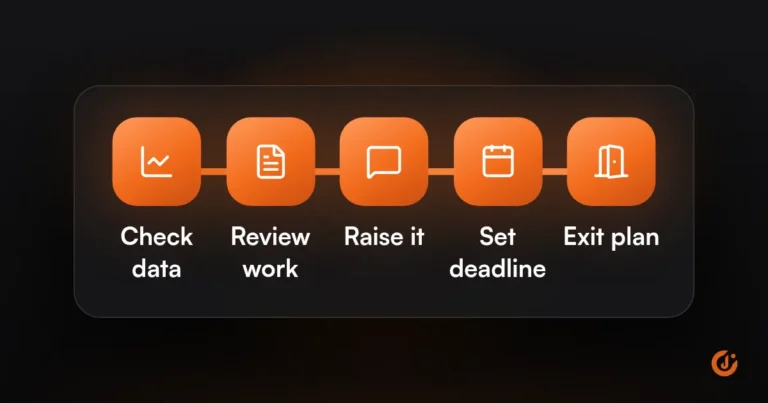
A simple monthly check:
- How much was spent, on which channels?
- How many leads or sales came in, and how many were good ones?
- What did each lead or customer cost, and can the business afford that?
- What was tested this month, and what was learned?
- What changes next month, and why?
- Do you own the ad accounts, the data and the website access?
“Is performance marketing worth it” has the same answer as the agency question: it is worth it when a customer brings in more than it costs to win them, and you can see that in numbers you trust. If you cannot get straight answers to the questions above, that is the problem to solve first.
If you decide to hire, read how to choose a digital marketing agency before signing anything. If you already have an agency and the answers are vague, start with what to do when a marketing agency is not delivering results.
FREE MARKETING AUDIT
Find Out Which Channels Are Actually Paying Off
JuvioX reviews your ad accounts, tracking and reporting across channels, then sends a prioritized list of what to fix first. Free, with no obligation.
FAQ
Frequently asked questions
Is it worth it to hire a marketing agency?
It is worth it when you have a proven offer, a budget for both the fee and ad spend, and work that needs several specialists. It is not worth it if the offer is untested, leads go unanswered, or you cannot measure what the marketing produces.
Is digital marketing actually worth it?
Yes, when it brings in customers for less than they are worth to you. Digital marketing is easier to measure than most advertising, so you can find out with a limited test budget and working tracking instead of guessing.
At what stage does in-house make sense?
In-house makes sense when one channel or function has become a full-time job, marketing is a steady part of how you grow, and you have someone able to manage the role. Many businesses start with an agency and bring work inside one function at a time.
Can you mix agency and in-house?
Yes, and many growing businesses do. A common split is in-house for content, social media, email and brand, with an agency for paid ads, tracking and landing page testing. It works when one person owns the overall plan and both sides report against the same numbers.
Is AI replacing agencies?
No. AI speeds up tasks like drafting ads, building reports and analyzing data, and ad platforms automate more bidding and targeting than before. Someone still has to set the strategy, feed the platforms accurate conversion data, judge lead quality and decide where the budget goes. AI changes what you should pay an agency for: thinking and accountability, not manual busywork.
How long does performance marketing take to work?
Early signals such as first leads or sales usually appear within weeks of launch. A fair judgment on profitability takes longer, often around a full quarter, because campaigns need data and testing. Small budgets and long sales cycles stretch that timeline.
2 sources & references
- U.S. Bureau of Labor Statistics Market Research Analysts and Marketing Specialists bls.gov
- U.S. Bureau of Labor Statistics Advertising, Promotions, and Marketing Managers bls.gov
Official pages we checked when writing this article.